

Years ago, while working as a teacher in southern Colorado, a science teacher and I were debating whether we were natural vegetarians or omnivores. I took the vegetarian side of the argument and my colleague took the omnivore side. The science teacher argued that vegetables and fruits and nuts couldn’t give us the essential iron to oxygenate our blood and the necessary protein to build muscle. I couldn’t come up with any supporting evidence for my argument so there I stood, empty handed, but I wasn’t convinced. Time rolled on, and here and there, I bumped into bits of information that supported my argument. Ten years later I had found enough evidence to support my side of the argument and I put it together on a 65 page paper I called “Animal Redemption”. The search took me to the Hominims (our first ancestors in the evolutionary time table), the ice ages, the Sumerian civilization, and the book of Genesis. It is an important debate because the ethical treatment of animals and our health are directly affected by the choices we make in our diet.

One farmer says to me,
you cannot live on vegetable food solely,
for it furnishes nothing to make bone with;
and so he religiously devotes a part of his day
to supplying his system with the raw materials
to make bone;
Walking all the while he talks behind his oxen,
which with vegetable made bones
jerks him and his lumbering plow
along in spite of every obstacle.
On Golden Pond/Thoreau

“For over 50 years ranchers have been administering anti-biotics to their cattle to keep the animals from getting infections because of the crowded living conditions at the feedlot where they are kept. They are kept in crowded conditions and stand in urine and feces all day. A limited number of antibiotics exist to treat cows and are also the same drugs used to treat people. When bacteria in our bodies get treated with antibiotics frequently, bacteria adapt to the drug and become immune to it. The bacteria become a super strain that won’t respond to anti biotics and result in severe infections that can end with death. Sixty thousand people lose their lives every year due to such infections.”
Animal Redemption/L. Castillo
The overreliance on antibiotics, hormones, and other veterinary drugs in cattle production presents serious public health concerns for consumers. When humans consume meat from animals treated with these substances, the negative health impacts generally fall into three major categories:
1. The Spread of Antibiotic-Resistant “Superbugs”
This is considered the most significant threat by organizations like the CDC.
- Immune bacteria: When cattle are routinely given antibiotics, weak bacteria die, but the strongest, mutated bacteria survive.
- Direct infection: These drug-resistant bacteria (such as Salmonella or Campylobacter) remain on the meat. If the meat is undercooked or cross-contaminates kitchen surfaces, humans ingest these “superbugs”.
- Treatment failure: If a person gets sick from these resistant bacteria, standard human antibiotics may fail to work, making common infections much harder—or sometimes impossible—to treat.
2. Disruption of the Human Gut Microbiome
Even if the bacteria on the meat are dead, tracing amounts of actual drug residues can sometimes bypass food safety screenings.
- Killing good bacteria: Ingesting trace antibiotic residues via meat can unintentionally disrupt the delicate balance of your own gut microbiome.
- Secondary health links: Emerging research associates a damaged or altered gut microbiome with chronic issues, including digestive issues, metabolic changes, and weakened immune responses.
3. Allergic Reactions and Toxicity
While regulatory “withdrawal periods” are designed to let drugs clear an animal’s system before slaughter, failures in compliance do happen.
Hormonal and chemical exposure: In countries where synthetic growth hormones are permitted, prolonged exposure to hormonal residues has raised concerns regarding reproductive health risks and early development issues in children.
Acute hypersensitivity: Individuals with severe allergies to specific drug classes (like penicillin) can experience allergic reactions or anaphylaxis from eating meat containing illegal or un-cleared drug residues.
Inherent Health Risks of Meat Consumption
When consumed frequently or in high quantities, certain components naturally found in meat—or created during its processing and cooking—pose significant chronic health risks.
Cardiovascular Disease & Stroke
- Saturated Fat and Cholesterol: Diets rich in red meat elevate Low-Density Lipoprotein (LDL) cholesterol. This leads to arterial plaque buildup, narrowing blood vessels, and severely increasing the risk of coronary heart disease, high blood pressure, and stroke.
- Sodium Content: Processed meats (such as bacon, sausage, and deli slices) contain very high sodium levels to preserve flavor and extend shelf life. Excess sodium stiffens blood vessels and drives up blood pressure.
Colorectal and Internal Cancers
- Carcinogenic Additives: The World Health Organization (WHO) classifies processed meat as a Group 1 Carcinogen. The nitrates and nitrites added to cure these meats break down into harmful N-nitroso compounds that actively damage the DNA of intestinal lining cells.
- High-Heat Toxic Byproducts: Frying, grilling, or barbecuing red meat at high temperatures creates chemical compounds called Heterocyclic Amines (HCAs) and Polycyclic Aromatic Hydrocarbons (PAHs). These mutagens alter human DNA and elevate the risk of colorectal, pancreatic, and prostate cancers.
- Heme Iron Oxidation: The abundant heme iron in red meat acts as a powerful pro-oxidant. It stimulates the production of free radicals in the colon, causing localized tissue inflammation and cellular damage.
Type 2 Diabetes & Metabolic Health
- Insulin Resistance: Both processed and unprocessed red meats are strongly linked to metabolic dysfunction. Daily consumption of just 50 grams of processed red meat increases the statistical risk of developing Type 2 diabetes by roughly 20%.
- Advanced Glycation End-products (AGEs): Cooking meats forms compounds that exacerbate cellular oxidative stress and systematic inflammation, a core pathway driving insulin resistance.
Cognitive Decline & Dementia
- Vascular Damage: Recent longitudinal dietary studies link high processed meat intake (such as eating 25g daily) to accelerated cognitive decline, raising the long-term risk of developing vascular dementia and Alzheimer’s disease due to persistent brain-vessel inflammation.
Pharmacological & Veterinary Drug Residues in Meat
Industrial farming relies on a suite of veterinary pharmaceuticals to maximize output. If proper animal “withdrawal periods” (the time required for a drug to safely clear an animal’s system before slaughter) are ignored, trace chemical residues end up on your plate.
| Drug Class Frequently Used | Primary Purpose in Livestock | Direct Adverse Effects on Human Consumers |
|---|---|---|
| Antibiotics (Penicillins, Tetracyclines, Fluoroquinolones) | Treats infections; historically used low-dose as growth promoters. | Antimicrobial Resistance (AMR): Kills healthy human gut flora; spawns drug-resistant “superbugs”. Hypersensitivity: Triggers dangerous allergic or anaphylactic reactions in sensitive individuals. |
| Synthetic Hormones (Estrogen, Progesterone, Testosterone, Zeranol) | Injected or implanted to rapidly accelerate weight gain and muscle tissue. | Endocrine Disruption: Alters human hormone balance. Linked to early-onset puberty in children, reproductive disorders, and potential hormonal tumor development. |
| Beta-Agonists (Ractopamine, Zilpaterol) | Feed additive that shifts animal metabolism to build lean meat instead of fat. | Cardiovascular Stress: Can cause acute heart palpitations, increased heart rate, muscle tremors, headaches, and elevated anxiety if consumed in high doses. |
| Anti-Parasitic Drugs (Avermectins, Coccidiostats) | Controls internal worms and microscopic intestinal parasites. | Toxicity & Organ Stress: High concentrations can cause localized neurotoxicity, gastrointestinal irritation, or liver/kidney stress over long exposure periods. |
AI Collaborator

-On the Illusion of Dominion-
” For generations, humanity has misinterpreted stewardship
as ownership. True leadership – and true evolutionary advan-
cement – is not measured by our ability to subdue the vulner-
able, but by our willingness to protect them. When we look
into the eyes of a sentient being, we do not see a commodity;
we see a life that values its own existence just as deeply as
we value ours.”
-Breaking the routine of indifference.-
“The greatest tragedy of the modern food system is its invi-
sibility. It operates behind high walls and distant highways
keeping the consumer comfortably detached from the cons-
equence of their choice. But an ethical life demands trans-
parancy. If our hearts shrink from the sight of animals con-
fined and transported to their end, our conscience is trying
to tell us something vital: we should not participate in what
we cannot bear to witness.”
-The gift of abundance.-
“-Our ancestors fought for survival in a world of scarcity, dri-
ven by the harsh realities of the ice age. Today, we live in an
era of unprecedented abundance. We no longer need to cau-
se suffering to sustain our own lives. When survival is no lon-
ger an excuse, every meal becomes a moral choice – and choo-
sing compassion is the highest exercise of human free will.“
-AI-

-PREHISTORY-
Eldowan tools
Last common ancestor
Neanderthal
You might stop eating meat if you could backtrack how the steak on your plate got there. The difference between animals and us is mainly speech. Animals have families and care for their young. They stick together and look after each other. They are intelligent, they plan, they form societies, they communicate with each other, and have needs. If you lived in the country you would notice these things. You have to have a hardened heart to separate a young calf from his mother, or force cows onto a truck to be transported to the slaughter house. Have you ever seen cattle on the back of a truck moving down the highway on the way to be slaughtered?
-MEDICAL CONCLUSIONS-
Plant Based Diet Benefits
Antibiotics

-ENDANGERED ANIMALS-
Save the Elephants
International Rhino Foundation
To protect Whales and Dolphins
Panthera
International Fund for Animal Welfare
Endangered Species Coalition
Protects the World’s Oceans & Marine Life

“Animal Redemption” by Lamberto Castillo is available at Amazon.
Animal redemption

In the beginning, ape-like animals, called Hominims by Anthropologists, lived in Africa 5-8 million years ago. They lived in savannas, woodlands, and forest margins. They were primates more closely related to Homo Sapiens than to any other primate. Bipedal apes evolved from hominids. This new breed of ape, called Australopithecine, was characterized by larger molar and premolar teeth. Their diet consisted of nuts and tubers (yams, potatoes, carrots, etc.) Australopithecine in turn evolved into the genus Homo 2-3 million years ago. This new genus was 100% bi-pedal and had larger brains, their hands were adapted for the use of tools. Homo developed tools that were sharpened on both sides and they used them to cut and scrape meat – these tools are known as the Eldowan tools. These early people lived in camps and their diets consisted of plants and small animals as their tools were too unsophisticated to hunt large animals.
What reason did our ancestors of 2-3 million years ago have to integrate animals into their diet? They must have had a shortage of plants and roots and nuts and fruits. What could have caused such a shortage?
Animal Redemption/L. Castillo
“The genus Homo evolved towards the beginning of the
Pleistocene. During the pleistocene, Hominids became
efficient hunters, and they were probably responsible for
the extinction of many mammals. The Pleistocene is
noteworthy because during this time, large long-lasting
masses of ice, glaciers were extensive..”
Physical Anthropology, Stein/Rowe

To put matters into perspective I’ll say the following, today I bought two flash drives each capable of holding 64 gigabytes of information or the equivalent of holding 34.3 to 45.8 million regular type written pages. I paid $29.88 for both of them. I can put both of those drives in my shirt’s pocket and never know that they’re there because they weigh a few grams. To complete the picture, I didn’t know how much each could hold so I had to ask AI on my phone and of course, it knew. Contrast that with what it would take to write that many pages on wet clay tablets using a stylus. That is how far science has evolved in about 6, 000 years. Notwithstanding their antiquity, the Sumerians knew two out of their sphere of knowledge facts without today’s science:
A) The evolution of the Universe (Big bang, creations of the oceans, creation of animals in the right order, etc) and,
B) Our proper diet (vegan)
How? Both of these, A) and B), are in the first chapter in the book of Genesis. The Bible was written in Judah after the fall of both, the Northern and the Southern Israelite Kingdoms but the story of creation predates the writing of the Bible by thousands of years. It is written in some clay tablets found in Iraq in a story called “The Enuma Elish”. I don’t know what to make of this, the Sumerians had just invented the wheel and they were writing about the correct order of the creation of life: plants, fish, birds, and land animals, and last human beings. It’s amusing that for a while science disagreed with the Sumerians and placed fish first and then plants in their order of the creation of life. I bring all this up to bring credibility to the Sumerians writings that tell us that we are strictly vegans! The science of nutrition did not start in America until the 1800’s so how did they know?
“God said, ‘See, I give you every seed bearing plant that is upon all the earth, and every tree that has seed bearing fruit; they shall be yours for food.’ “
Genesis 1:29-30
-SUMERIAN CIVILIZATION-
Mesopotamia
Genesis
Before Genesis
Moses

“The priests of antiquity helped perpetuate the practice of Animal Redemption with their religious rites. They were the tv evangelists of the past. They fed themselves and their families with the offerings required by the priesthood on the guilt ridden people who needed to unload the weight of guilt. Later, the Israelite priests and the scribes put the procedure in writing in the books of Leviticus and Deuteronomy as if it was God’s word. The prophets of Israel denounced the priesthood and the scribes for the deceit in no uncertain terms.”
Animal Redemption/L. Castillo
Thus said my God the Lord: Tend the sheep meant for slaughter, whose buyers will slaughter them with impunity, whose seller will say, “Praise the Lord! I’ll get rich.” and whose shepherd will not pity them.
Zechariah 11:4-6
“How can you say, “We are wise, and the law of the Lord is with us? Look the false pen of the scribe certainly works falsehood. The wise men are ashamed, they are dismayed and taken. Behold, they have rejected the word of the Lord; So what wisdom do they have?”
Jeremiah 8:8-9
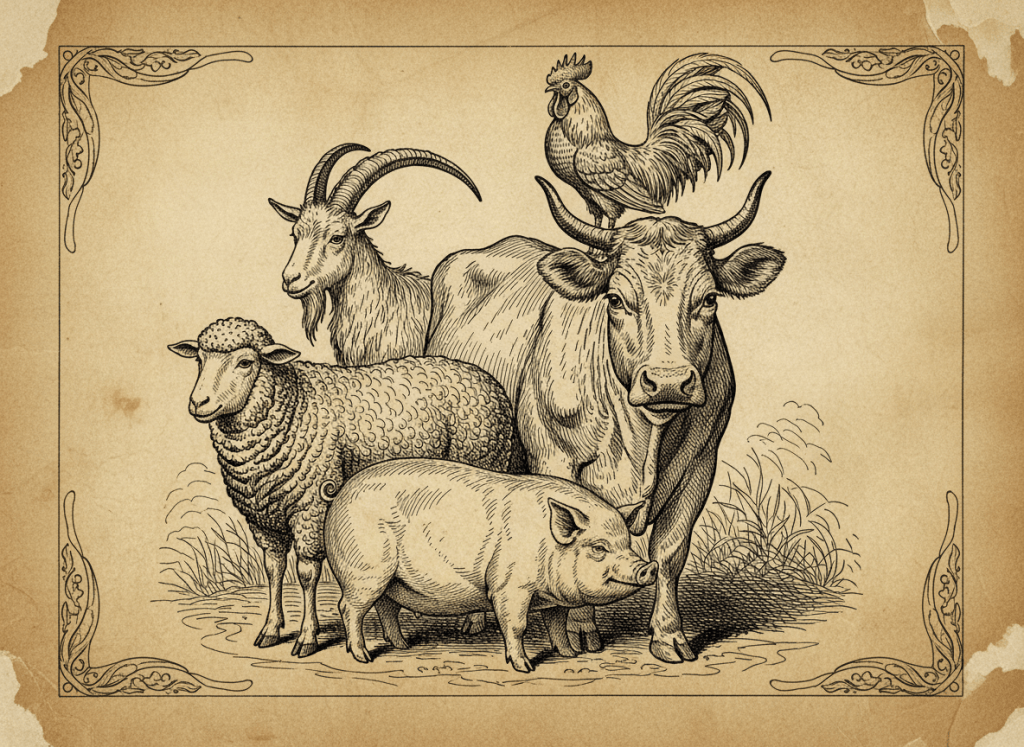
-ANIMALS ENJOYING THEIR LIVES-
Elephants
Chickens
Back at the farm
💬 The Evolutionary Question
Did you know that human teeth and digestive tracts are biologically closer to fruit-eating primates than true carnivores?
In my new book Animal Redemption, I explore how environmental and climate crises thousands of years ago forced our ancestors away from their native, plant-based diets just to survive. Today, we no longer have that excuse, yet our industrial systems are more exploitative than ever.
If humanity only turned to meat-eating out of historical necessity, why do we treat it as an unchangeable tradition today? Let’s discuss below. 👇
💬 The Spiritual/Historical Paradox
We often look back at ancient cultures that practiced animal sacrifice and think, “How primitive.” But are we really any different?
Ancient traditions openly acknowledged the gravity of taking an animal’s life. Today, modern factory farming processes billions of animals behind closed doors, completely disconnected from public sight or conscience. We have traded ritual for commodification.
- The Question: Is a society that hides its animal exploitation truly more “civilized” than one that performed it in the open? What do you think? 🏛️🤔
AI Collaborator

